
Platform Pieces - a welcome return
How Brixton Station got its statues back

The platforms of Brixton railway station, perched high eyrie-like above the teeming streets, can often be a windswept, somewhat desolate spot, open to the elements, exposed, vulnerable.
But for the last few years they have felt lonelier than usual, a gnawing absence of familiar faces as the statues they have hosted for the last few decades have been absent, removed over fears they might finally give up waiting for their non-existent train and topple over and injure someone.
But, this week, after an absence of three or so years (not seven as some news reports have claimed), Kevin Atherton’s Platform Pieces have returned and what a reassuring pleasure it is to see them back.
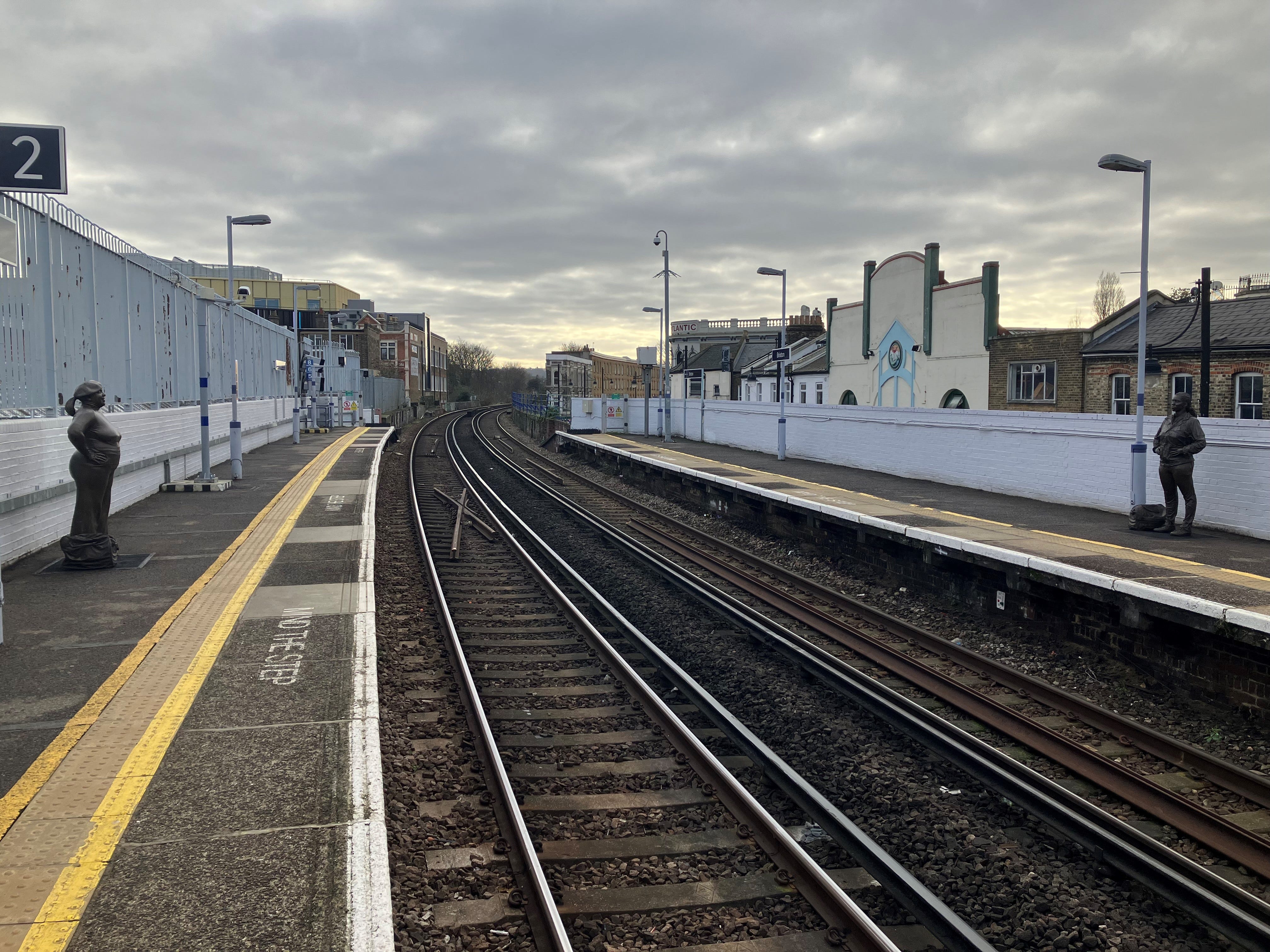
First erected in 1986, they were commissioned by British Rail after encouragement by the Public Art Development Trust, as part of a £1 million improvement scheme. Given listed status by Historic England in 2016 they are widely understood to be the first sculptural representations of British black people in England ‘in a public art context’.
Despite the thousands of statues that proliferate in the streets up and down the country, the number that are of identifiable, named, black people is shockingly few, possible for two people to count on their fingers. In 2020, a study by the BBC, using the database of the Public Monuments & Sculpture Association (PMSA) found that there were about 15 outdoor statues ‘of named black individuals’ in the UK.
No wonder their absence from Brixton Station has been felt so keenly.
When he set about his work back in the 1980s, artist Kevin Atherton was eager not only to connect with the mundanity of the daily commute, the patient, almost time-slowing experience of waiting for one’s train, but also to represent the real inhabitants of Brixton, so he chose people with local connections, Peter Lloyd, Karin Heisterman and Joy Battick.
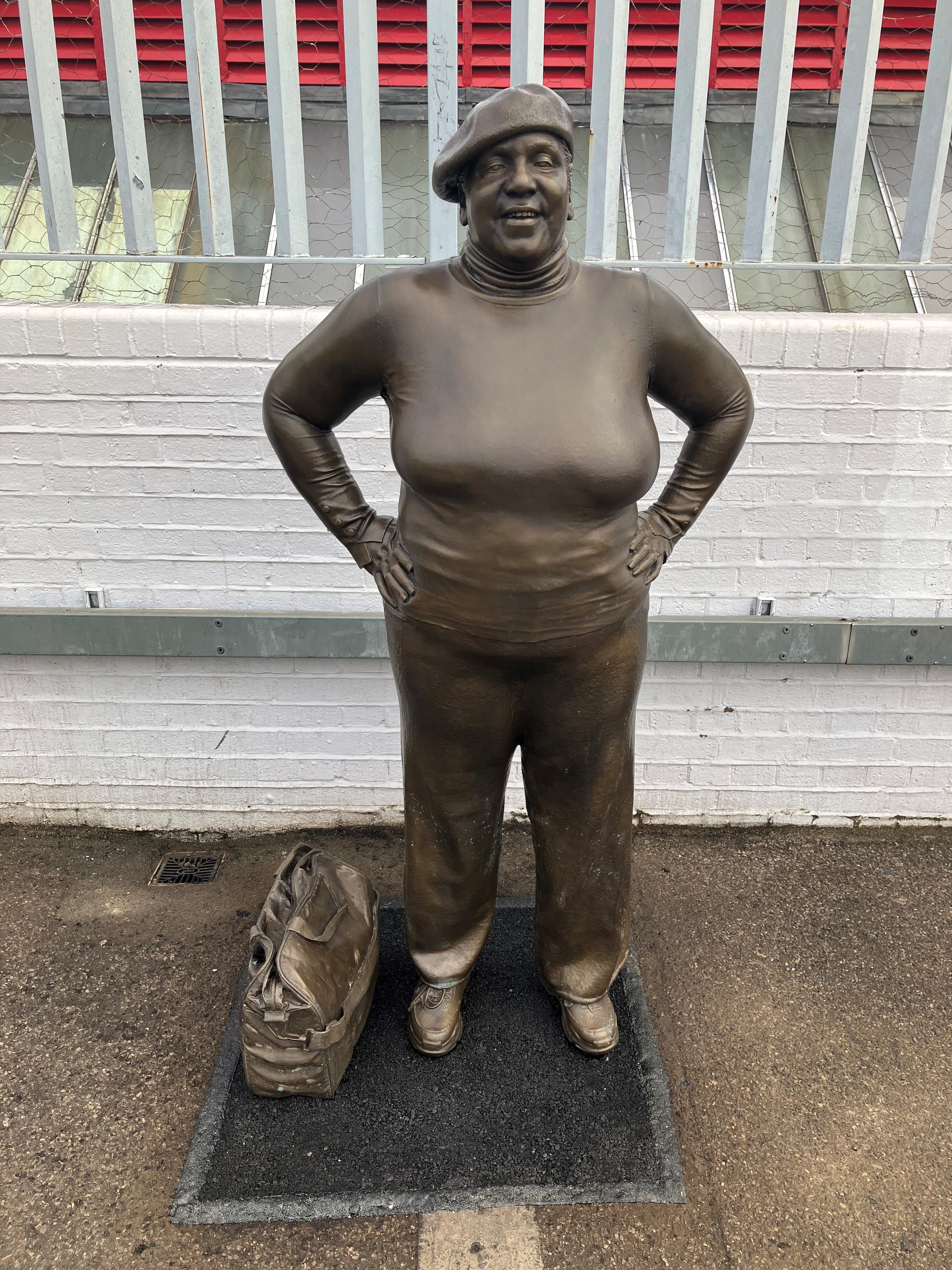
Two of the three original statues - those of Peter and Karin - are in their familiar positions, facing each other across the tracks towards London Victoria. The statue of Joy, though, has pleasingly been moved from the obscurity of the now abandoned third platform to a more prominent location. It shows her when she was 26, an employee at the nearby Brixton Recreation Centre, a baggy satchel at her feet. And opposite her is a new statue, Joy II, depicting her as she is now, 36 years on, with the same baggy satchel sitting close by. It’s a real celebration of person and place. And it’s quite something that there are now as many public statues of Joy in London, if not in the whole country, as there are of Nelson Mandela.
Speaking this week, as the new statue and her older peers were unveiled, Joy said: ‘I don’t think many people can claim to have a life-size statue of themselves so to have two in the same place is quite amazing!’
It should be a moment to cherish and celebrate.
But, while considering this piece, I am minded that the government, in its wisdom, has decided to row back on its commitment to implement all of Wendy Williams’s recommendations in her Windrush Lessons Learned Review. This was the culmination of the inquiry set up after the Windrush scandal which saw many British residents erroneously branded illegal immigrants.
In a written statement - a convenient way to avoid actually having to discuss the matter in the House of Commons - Home Secretary Suella Braverman said:
‘After considering officials’ advice, I have decided not to proceed with recommendations 3 (run reconciliation events), 9 (introduce migrants’ commissioner) and 10 (review the remit and role of the independent chief inspector of borders and immigration) in their original format.’
There has been little explanation for this reverse. One is left to presume that the Home Office is simply hoping to continue with the hostile environment.
And the scandal was, of course, an issue that disproportionately affected Brixton residents, as so many from the Windrush generation choose to make the area their home after they came to work in Britain from the Caribbean, after being invited to help rebuild the country after being exhausted by the Second World War. Yet, after decades of service - and crucially a long term acceptance that the first migrants and their families could remain in this country - hundreds started being detained, denied legal rights and deported.
We were treated to the grotesque spectacle of people who had arrived here as children, living in this country entirely legally for more than fifty years, losing their jobs, their rights, their homes, left battling for their future.
The government’s u-turn has, inevitably, provoked upset and consternation. One of those taking a lead has been the Liberal Democrat peer and television presenter Floella Benjamin, who chaired the Windrush Commemoration Committee, which commissioned the recently unveiled monument in Waterloo Station by artist Basil Watson


It is, of course, terrific these statues have returned, freshly restored to face whatever comes their way, but there remain deep fissures within our wider societal cohesion that also urgently need mending.